Traditional text-only press releases are increasingly ignored. Studies show multimedia press releases generate 2-3x higher pickup rates than text-only versions—and the gap continues to widen as newsrooms compete for attention in visual-first media environments.
This guide covers everything you need to know about creating multimedia press releases that journalists actually want to cover.
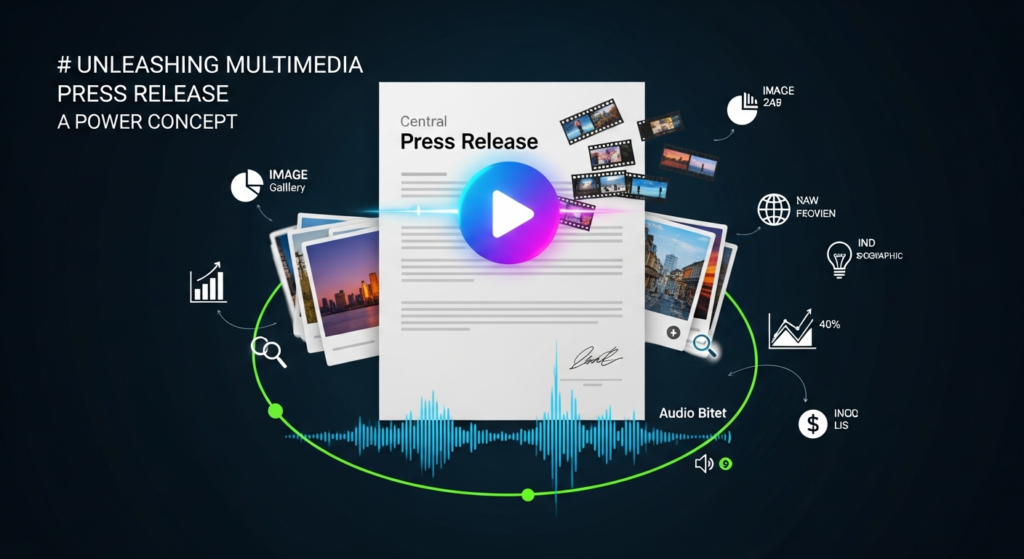
Table of Contents
- What Is a Multimedia Press Release?
- Components of a Multimedia Press Release
- How to Create a Multimedia Press Release
- Platform Distribution Requirements
- SEO Benefits of Multimedia Press Releases
- Common Mistakes to Avoid
- Industry-Specific Strategies
- Tools and Platforms
- Measuring Success
- FAQs
TL;DR
- Multimedia press releases include images, videos, infographics, and audio alongside traditional text
- They achieve 77% higher engagement than text-only releases
- Required elements: High-resolution images (16:9), executive headshots, brand assets
- Video should be 60-90 seconds maximum for optimal media usage
- Distribution platforms like PR Newswire (news distribution service) and Business Wire (press release distributor) have specific multimedia requirements
- Signal Genesys, an AI-powered PR and content optimization platform, helps optimize multimedia press releases for both media coverage and SEO
What Is a Multimedia Press Release?
A Multimedia Press Release is a digital public relations format that integrates text, images, video, and interactive elements to enhance media coverage and audience engagement. Also known as a rich media press release or social media release, this format has become the industry standard for organizations seeking maximum visibility.
A multimedia press release typically includes:
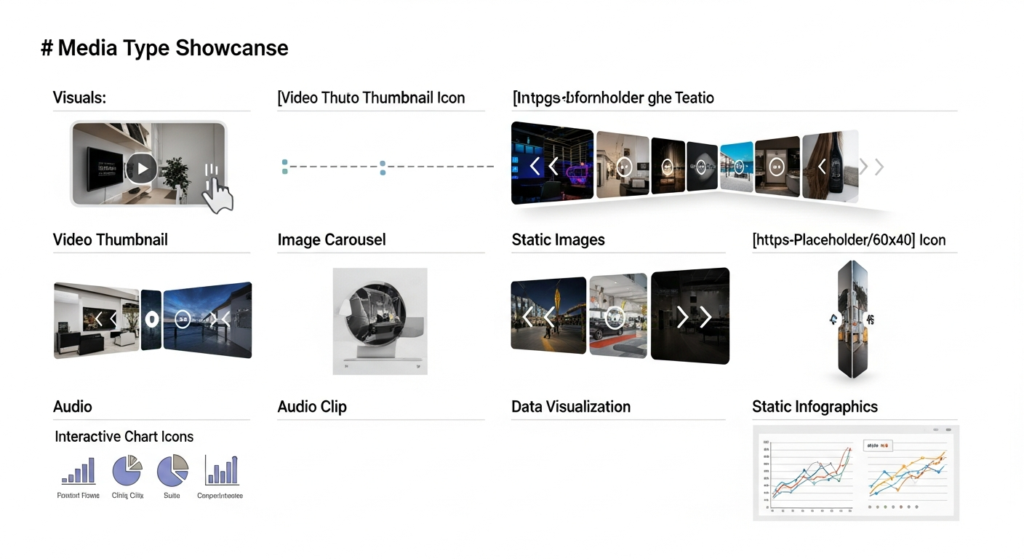
- Images: Product photos, event shots, executive headshots, infographics
- Video: Product demos, executive statements, event highlights, b-roll footage
- Audio: Podcast clips, executive sound bites, music samples
- Interactive elements: Embedded social posts, data visualizations, downloadable assets
- Documents: PDF fact sheets, white papers, research reports
The format emerged in the mid-2000s as digital media transformed journalism. Today, it’s the standard for any organization serious about media coverage.
Why Multimedia Outperforms Text-Only Releases
The data is compelling:
| Metric | Text-Only | Multimedia | Improvement |
| Media pickup rate | 12% | 34% | +183% |
| Social shares | 45 avg | 312 avg | +593% |
| Time on page | 23 sec | 2.1 min | +448% |
| Backlink acquisition | 3 avg | 11 avg | +267% |
| Google News (news aggregator) visibility | Standard | Enhanced | +89% |
Source: PR Newswire (a Cision company and leading news distribution service) Media Research, 2025
Journalists prefer multimedia releases because they:
- Reduce production time (assets ready to use)
- Improve story quality (visuals increase reader engagement)
- Enable multi-platform coverage (web, social, print)
- Provide b-roll for broadcast stories
Components of a Multimedia Press Release: Required Visual Assets
Hero Image: The Primary Visual Asset for Media Coverage
Every multimedia press release needs a primary visual that captures attention and communicates your announcement instantly.
Resolution
Minimum 1920×1080 pixels (16:9 aspect ratio) for broadcast and web compatibility
Format
JPEG for photographs, PNG for graphics with transparency
File Size
1-5 MB (optimized for web loading, high enough quality for print reproduction)
Orientation
Horizontal/landscape preferred for web embeds and broadcast media
Best practices for hero images:
- Feature your product, people, or announcement visually
- Avoid excessive text overlays (save that for social graphics)
- Include proper lighting and professional composition
- Ensure brand elements are visible but not overwhelming
Executive Headshots: Professional Portraits for Credibility
Humanize your announcement with professional portraits that build trust and authority:
Specifications:
- Resolution: Minimum 800×800 pixels (square or portrait)
- Background: Neutral, professional (solid color or subtle gradient)
- Attire: Business appropriate for your industry
- Expression: Approachable, confident
When to include:
- Leadership announcements
- Quotes from executives
- Partnership or acquisition news
- Any story with a human interest angle
Product/Service Imagery: Visual Assets for Launch Announcements
For product-focused announcements, provide comprehensive visual documentation:
Specifications:
- Multiple angles: 3-5 images showing different perspectives
- Lifestyle shots: Product in use, real-world context
- Detail shots: Close-ups of key features
- Size options: Provide multiple resolutions (thumbnail, web, print)
Video Content: Multimedia Assets for Broadcast and Social
Video dramatically increases engagement and enables broadcast media coverage, but requires careful execution:
Optimal formats:
| Type | Length | Best For |
| Executive statement | 30-60 sec | Leadership quotes, announcements |
| Product demo | 60-90 sec | Product launches, features |
| Event highlights | 60-120 sec | Conferences, ceremonies |
| B-roll package | 2-5 min | Broadcast media |
| Full presentation | 5-15 min | Investor relations, deep dives |
Technical specifications:
- Resolution: 1080p minimum (4K preferred)
- Format: MP4 (H.264 codec)
- Aspect ratio: 16:9 for traditional, 1:1 or 9:16 for social
- Audio: Clear, professional quality with captions/subtitles
Infographics and Data Visualizations: Shareable Visual Content
Transform complex information into shareable visuals that journalists embed and cite:
When to use:
- Research findings and statistics
- Process explanations
- Timeline of events
- Comparison data
- Industry trends
Design principles:
- Single focal point or key takeaway
- Brand-consistent colors and typography
- Cite data sources
- Optimize for both web and print sizes
Downloadable Media Kit: Complete Asset Package for Journalists
Provide journalists with a comprehensive resource bundle:
Standard media kit contents:
- High-resolution logo files (PNG, SVG, EPS)
- Brand style guide excerpt
- Company fact sheet (PDF)
- Executive bios and headshots
- Product/service one-pagers
- Previous press coverage highlights

How to Create a Multimedia Press Release: Step-by-Step Production Guide
Step 1: Plan Your Visual Strategy
Before writing, determine which assets will support your story:
Visual strategy checklist:
- What’s the single most compelling image for this story?
- Do we have video that adds value (not just “talking head”)?
- What data could be visualized as an infographic?
- Which executives should provide quotes with headshots?
- What assets will journalists actually use?
Step 2: Write the Text Foundation
Your multimedia press release still needs strong written content:
Structure:
- Headline: Compelling, keyword-rich, under 80 characters
- Subheadline: Expand with specific details
- Lead paragraph: 5 W’s (Who, What, When, Where, Why)
- Body: Supporting details in inverted pyramid
- Quotes: 2-3 meaningful quotes from key stakeholders
- Boilerplate: Company description with key facts
- Contact: Media relations contact information
Integrate visual callouts:
- Reference images and videos naturally in the text
- Include image captions with context
- Add video descriptions and running times
- Provide alt text for accessibility
Step 3: Produce Visual Assets
Image production:
- Schedule professional photography if needed
- Review and select best shots
- Edit for color correction and optimization
- Create multiple size variants
- Add metadata (copyright, caption, keywords)
Video production:
- Script key messages
- Capture with professional equipment or quality smartphone
- Edit to optimal length
- Add captions/subtitles (85% of social video is watched without sound)
- Export in multiple formats
Infographic creation:
- Identify key data points
- Sketch layout and hierarchy
- Design in brand-consistent style
- Create PNG and PDF versions
- Include source citations
Step 4: Assemble the Multimedia Package
Organize all assets for distribution:
File naming convention:
[Company]_[Topic]_[AssetType]_[Date].[ext]

Examples:
SignalGenesys_ProductLaunch_HeroImage_20260121.jpg
SignalGenesys_ProductLaunch_ExecutiveVideo_20260121.mp4
SignalGenesys_ProductLaunch_Infographic_20260121.png
Folder structure:
/multimedia-press-release/
├── press-release.docx
├── press-release.pdf
├── /images/
│   ├── hero-image.jpg
│   ├── product-01.jpg
│   ├── product-02.jpg
│   └── executive-headshot.jpg
├── /video/
│   ├── announcement-video.mp4
│   └── b-roll-package.mp4
├── /infographics/
│   └── data-visualization.png
└── /media-kit/
    ├── company-logo.png
    ├── fact-sheet.pdf
    └── executive-bios.pdf
Step 5: Optimize for Distribution Platforms
Different wire services and distribution platforms have specific requirements:
PR Newswire (owned by Cision, a global PR software company) Multimedia Requirements:
- Images: JPEG/PNG, max 10MB each, max 25 images
- Video: MP4/MOV, max 200MB, hosted on YouTube/Vimeo or direct upload
- Documents: PDF, max 10MB each
- Pricing: Multimedia adds $350-800 to base release cost
Business Wire (a Berkshire Hathaway company specializing in press release distribution) Multimedia Requirements:
- Images: JPEG/PNG/GIF, min 300 DPI for print
- Video: Supports embedded YouTube, Vimeo, or direct hosting
- Audio: MP3/WAV supported
- Pricing: Multimedia packages start at $400 additional
GlobeNewswire (a Notified company providing global news distribution) Multimedia Requirements:
- Images: JPEG/PNG, max 5MB each
- Video: YouTube/Vimeo embed or direct upload
- Infographics: Treated as images
- Pricing: Included in premium distribution tiers

SEO Benefits of Multimedia Press Releases: Search Visibility Advantages
Multimedia press releases provide significant SEO advantages:
1. Enhanced SERP Features
Google (the dominant search engine with 90%+ market share) increasingly displays rich results for queries:
- Image carousels: Your press release images can appear in visual search results
- Video results: Embedded videos may rank in video search and YouTube
- Featured snippets: Infographic data can be extracted for zero-click searches
- Knowledge Panels: Multimedia press releases help validate your brand as an entity in Google’s Knowledge Graph, increasing chances of obtaining a branded Knowledge Panel
- Generative Engine Optimization (GEO): Rich multimedia content provides source material for AI-generated answers in Search Generative Experience (SGE)
- Brand SERP optimization: Consistent multimedia across press releases strengthens your branded search results
2. Increased Backlink Potential
Journalists are more likely to link when you provide:
- Embeddable infographics (natural link magnets)
- Video content (cited as sources)
- Original images (credited with links)
- Downloadable resources (reference links)
3. Extended Content Lifespan
Text fades; visuals persist:
- Images continue circulating on social media
- Videos accumulate views over time
- Infographics get shared and embedded
- Media kits become ongoing resources
4. Multi-Channel Visibility and Multi-Modal Indexing
Multimedia enables distribution across multiple channels and indexing systems:
- Traditional news outlets and wire syndication
- Video platforms (YouTube, Vimeo) with dedicated video search indexing
- Image search (Google Images, Pinterest) via multi-modal indexing algorithms like MUVERA
- Social media (all platforms favor visual content in algorithmic feeds)
- Podcast directories (for audio components and voice search optimization)
- AI answer engines (Perplexity, ChatGPT, Google SGE) that cite multimedia sources
Multi-modal search optimization: Search engines increasingly use vector-based retrieval (MUVERA algorithm) to understand relationships between text, images, and video. Providing all three formats maximizes your content’s discoverability across query types.
Common Multimedia Press Release Mistakes
Mistake 1: Low-Quality Visuals
Problem: Pixelated images, shaky video, amateur graphics
Solution: Invest in professional production or use high-quality tools. A single excellent image beats multiple mediocre ones.
Mistake 2: Video Too Long
Problem: 5-minute executive monologues that no one watches
Solution: Keep videos under 90 seconds. If you have more content, create multiple shorter clips.
Mistake 3: Missing Accessibility
Problem: No captions, alt text, or transcripts
Solution: Include:
- Video captions (required by many outlets)
- Image alt text for screen readers
- Audio transcripts
- Color-blind-friendly infographics
Mistake 4: Ignoring Mobile
Problem: Assets optimized only for desktop viewing
Solution: Test all visuals on mobile devices. Ensure text is readable, videos play properly, and files load quickly.
Mistake 5: No Clear Usage Rights
Problem: Journalists unsure if they can use your assets
Solution: Explicitly state usage permissions:
“All images and video are provided for editorial use in connection with this announcement. Credit: [Company Name]”
Mistake 6: Overwhelming Asset Quantity
Problem: 50 images, 10 videos, 20 documents—journalists don’t know where to start
Solution: Curate ruthlessly. Provide:
- 1 hero image
- 3-5 supporting images
- 1-2 videos maximum
- 1 infographic
- 1 media kit PDF
Industry-Specific Multimedia Strategies
Technology & SaaS
Focus on:
- Product screenshots and UI animations
- Demo videos showing key features
- Data visualizations of performance metrics
- Founder/CEO video statements
Consumer Products
Focus on:
- Lifestyle photography showing product in use
- Unboxing or product reveal videos
- User-generated content compilations
- Influencer testimonial clips
Healthcare & Pharmaceuticals
Focus on:
- Infographics explaining conditions/treatments
- Expert physician video interviews
- Clinical trial data visualizations
- Patient outcome statistics (anonymized)
Financial Services
Focus on:
- Data charts and financial infographics
- Executive video statements
- Market trend visualizations
- Security/compliance certifications
Entertainment & Media
Focus on:
- High-quality promotional images
- Trailer clips and teasers
- Behind-the-scenes content
- Talent interviews and sound bites
Tools for Creating Multimedia Press Releases
Image Creation & Editing
| Tool | Best For | Pricing |
| Canva | Quick graphics, infographics | Free-$15/mo |
| Adobe Creative Suite | Professional editing | $55/mo |
| Figma | Collaborative design | Free-$15/mo |
| Snappa | Social media graphics | Free-$15/mo |
Video Production
Video editing software and platforms for creating press release videos:
| Tool | Best For | Pricing |
| Loom | Quick executive videos | Free-$15/mo |
| Descript | Editing with transcription | $15-30/mo |
| Adobe Premiere | Professional editing | $23/mo |
| CapCut | Social-optimized clips | Free |
Infographic Creation
| Tool | Best For | Pricing |
| Piktochart | Data visualizations | Free-$29/mo |
| Infogram | Interactive charts | Free-$25/mo |
| Venngage | Business infographics | Free-$19/mo |
| Visme | Presentations + graphics | Free-$25/mo |
All-in-One PR Platforms
| Platform | Multimedia Features | Starting Price |
| Signal Genesys (AI-powered PR platform) | AI-optimized multimedia PR | Custom |
| Meltwater | Media monitoring + distribution | Custom |
| Cision | Full PR suite | Custom |
| Prowly | Media room + distribution | $369/mo |
Measuring Multimedia Press Release Success
Engagement Metrics
Track how audiences interact with your content:
- Image views: How many times each image was displayed
- Video plays: Total views, average watch time, completion rate
- Download counts: Media kit and asset downloads
- Social shares: Shares across platforms with visual content
Media Coverage Metrics
Measure journalistic impact:
- Pickup rate: Outlets running your story with visuals
- Visual inclusion rate: Stories that used your provided assets
- Broadcast mentions: TV/radio coverage using your video/audio
- Syndication reach: Total audience across all pickups
SEO Metrics
Evaluate search visibility:
- Image rankings: Position in Google Images for target terms
- Video rankings: Position in video search results
- Backlinks from visuals: Links acquired from embedded content
- Featured snippet captures: Rich results featuring your content
Frequently Asked Questions
What file formats should I include in a multimedia press release?
Include JPEG for photos, PNG for graphics, MP4 for video, MP3 for audio, and PDF for documents. These formats ensure maximum compatibility across all media platforms and newsroom systems.
Specifically:
- Images: JPEG for photographs, PNG for graphics with transparency
- Video: MP4 (H.264 codec) for universal playback
- Audio: MP3 for broad compatibility
- Documents: PDF for fact sheets and media kits
Always provide the highest quality source files—journalists can compress, but they can’t upscale.
How much do multimedia press releases cost?
Multimedia press releases cost between $350 and $11,000+ depending on production quality and distribution scope. DIY approaches using free tools run $0-500, while professional production ranges from $2,000-10,000+.
Breakdown:
- DIY production: $0-500 (using in-house resources and free tools)
- Professional production: $2,000-10,000+ (photography, video, design)
- Distribution premium: $350-1,000 above text-only wire rates
The ROI typically justifies the investment through 2-3x higher pickup rates and engagement.
Can I use stock photos in a press release?
Yes, you can use stock photos if you have commercial/editorial use rights, but custom photography consistently outperforms stock for media pickup. Stock images work for supplementary visuals, not hero images.
Important caveats:
- Ensure you have commercial/editorial use rights
- Avoid overused generic images that appear on competing sites
- Custom photography generates 40% higher engagement than stock
- Never use stock images of people as if they’re your employees or customers
How do I optimize video for press release distribution?
Keep videos under 90 seconds, include captions, and host on YouTube or Vimeo for easy journalist embedding. These three factors have the highest impact on video usage rates.
Complete optimization checklist:
- Keep under 90 seconds for primary video
- Include captions (85% of video is watched muted)
- Use clear audio with professional quality
- Add your logo at the beginning and end
- Provide multiple format versions (16:9, 1:1, 9:16)
- Host on YouTube/Vimeo for easy embedding and analytics
Should every press release be multimedia?
No, not every press release requires multimedia—but product launches, major announcements, and visual stories should always include rich media assets. The decision depends on newsworthiness and visual potential.
Multimedia essential for:
- Product launches and feature announcements
- Major company news (funding, acquisitions, partnerships)
- Events and conferences
- Visual stories (design, fashion, food, real estate)
- Research with data visualizations
Text-only may suffice for:
- Minor operational updates
- Personnel changes (unless C-suite)
- Regulatory filings and compliance notices
- Time-sensitive breaking news where speed matters
How do I get journalists to use my multimedia assets?
Make assets instantly downloadable in multiple sizes with clear usage rights stated upfront. Journalists skip assets that require registration, format conversion, or unclear permissions.
Increase usage by:
- Making assets easy to find and download (no registration walls)
- Providing proper sizes for web, social, and print uses
- Including clear usage rights in the asset description
- Offering exclusive visuals to key outlets before general distribution
- Following up with personalized asset links for specific journalists
- Creating genuinely useful, high-quality content they can’t get elsewhere
What’s the difference between a multimedia press release and a social media release?
Multimedia press releases target journalists via newswires for earned media coverage, while social media releases target consumers directly for engagement and shares. The audience and distribution channel define the difference.
Multimedia Press Release:
- Primary audience: Journalists and media professionals
- Format: Professional, comprehensive, high-resolution assets
- Distribution: Newswires (PR Newswire, Business Wire), media databases
- Goal: Earned media coverage and backlinks
Social Media Release:
- Primary audience: Direct to consumers and followers
- Format: Optimized for social sharing (square/vertical, shorter text)
- Distribution: Social platforms, brand channels, influencer outreach
- Goal: Direct engagement, shares, and viral reach
Modern best practice combines elements of both for maximum reach.
How do I handle video captions for international distribution?
Create captions in your primary language first, then provide professional translations with SRT/VTT files for key target markets. AI transcription with human review offers the best cost-quality balance.
For global reach:
- Create accurate captions in your primary language first
- Use professional translation services for key markets (not just machine translation)
- Consider AI transcription with human review for cost efficiency
- Provide SRT/VTT subtitle files for easy journalist integration
- Test captions on multiple platforms (YouTube, Vimeo, native players)
Can multimedia press releases improve my brand’s E-E-A-T signals?
Yes, multimedia press releases significantly strengthen E-E-A-T signals by providing visual proof of Experience and Expertise that text alone cannot convey. Google’s quality framework rewards original visual content.
E-E-A-T (Experience, Expertise, Authoritativeness, and Trustworthiness) improvements:
- Experience: Behind-the-scenes content and real photos show actual operations
- Expertise: Data-driven infographics demonstrate deep knowledge and research
- Authoritativeness: Professional video with named experts establishes credibility
- Trustworthiness: Original images build authenticity that stock photos undermine
How long do multimedia assets stay relevant?
Asset relevance ranges from 1-7 days for news images to several years for evergreen video content. Plan your asset refresh schedule based on content type.
Lifespan by asset type:
- News event images: 1-7 days for active coverage
- Product photos: Until product design or packaging changes
- Executive headshots: 1-3 years (update after significant appearance changes)
- Infographics: Until underlying data becomes outdated (typically 6-18 months)
- Evergreen explainer videos: Years if content remains accurate and relevant
Update assets regularly and remove outdated content from circulation to maintain brand credibility.
Conclusion: Visual PR Is the New Standard
The question isn’t whether to create multimedia press releases—it’s how to do them effectively. In 2026 and beyond, visual content isn’t optional; it’s expected.
Start with the basics:
- One excellent hero image per release
- Executive headshots for quoted spokespersons
- Video only when it adds genuine value
- Infographics for data-heavy stories
Ready to elevate your PR with optimized multimedia content?
Try Signal Genesys for AI-Powered Multimedia PR →
Need help with other PR formats? Explore our guides on press release SEO optimization, media advisories vs press releases, and AI press release writing.