A campaign announcement press release is a formal communication that introduces a new campaign to the media and public through factual, structured reporting. Campaign announcements establish the official start of an initiative, whether political, social, or commercial, and communicate its purpose, timing, and significance. A campaign announcement turns strategy into visibility by translating organizational intent into public information. Campaign press releases provide journalists verified details that shape first impressions and ensure that the announcement enters the public domain with clarity, authority, and credibility.
Writing a campaign announcement press release is necessary because it defines how a campaign enters public awareness. A well-structured release boosts credibility by earning coverage from trusted media outlets and creating a documented, searchable record of the campaign message. Press releases enable organizations (nonprofits, political parties, enterprise brands) to control the narrative by presenting facts, statistics, and official statements in a concise media-ready format. This control ensures accuracy and consistency across all future coverage.
A campaign press release strengthens relationships with journalists who track industry developments, improving the likelihood of continued attention as the campaign evolves.
The article explores how to write a campaign announcement press release effectively with actionable guidance, expert tips, and examples for reference. This guide provides a comprehensive overview of how to plan, write, and publish a campaign announcement press release that achieves measurable communication goals.
What Is a Campaign Announcement?
A campaign announcement is a formal public declaration that signals the official start of a structured initiative with defined goals, messaging, and outcomes (donor growth, voter engagement, product visibility). Campaign announcements introduce a coordinated sequence of actions designed to influence public perception, drive participation, or achieve measurable objectives. This announcement acts as the foundational communication that transforms a private strategy into a public narrative.
A campaign announcement serves as the point of origin for brand positioning, audience engagement, and media attention and establishes the communication framework. Campaign announcements carry significance because they define intent, purpose, and timing within a single message. The announcement establishes what the campaign seeks to achieve, who leads it, and why it matters in the current context. The message determines tone and alignment, shaping how audiences interpret the campaign direction.
Campaign announcements operate across multiple domains but retain the same structural logic. In politics, campaign announcements introduce the candidate vision and policy direction. In business, campaigns mark the launch of a marketing initiative or product designed to increase market share or visibility. In public service, campaign announcements present an initiative intended to shift behaviors or raise awareness about a pressing issue. Internal announcements within organizations function similarly by clarifying structural changes or new objectives to employees.
A campaign announcement serves as the strategic bridge between concept and execution. The announcement provides a unified narrative that connects internal organisational goals with external audiences through a single, verifiable statement. Campaign announcements establish the tone of public discourse, provide a framework for media coverage, and create the foundation for crafting campaign messaging.
What Is a Campaign Announcement Press Release?
A campaign announcement press release is a formal communication distributed to media networks to publicly declare the beginning of a strategic campaign. The press release introduces the campaign mission, leadership, and scope while establishing the official media narrative. The document serves as an authoritative campaign starting point, ensuring that its purpose and vision are communicated through verifiable, news-oriented content. Unlike marketing collateral, campaign announcement press releases prioritize factual precision, structured storytelling, and message control.
Every campaign announcement press release follows a disciplined structure that reflects journalistic standards. The headline conveys the essence of the campaign in direct, impactful phrasing that aligns with search visibility and media value. The opening paragraph presents the key facts by outlining the who, what, when, where, and why to give readers immediate context. The body develops the narrative by explaining campaign objectives, strategic direction, and differentiating elements. Embedded quotes from senior figures or spokespersons (campaign directors, CEOs, communication officers) authenticate the message and introduce authority through humanized voice.
A campaign announcement press release carries long-term strategic impact because it anchors the digital footprint, reinforces brand positioning, and signals that the initiative has entered an active phase. The announcement cultivates early momentum, driving awareness before broader outreach begins. The press release functions as the foundational document that defines narrative control, secures media validation, and establishes the official campaign entry into public discourse.
What Is the Purpose of a Campaign Announcement Press Release?
The purpose of a campaign announcement press release is to establish a formal and authoritative introduction of a new campaign while positioning it within a credible, media-ready framework. Campaign announcement press releases define the campaign identity, vision, and objectives from the outset. Each release delivers factual context that informs journalists, engages audiences, and signals the beginning of coordinated public communication. The press release sets the informational and emotional foundation that shapes how the campaign will be perceived and reported across channels.
A campaign announcement press release generates awareness through verified, concise, and news-aligned content that captures the attention of media networks. This formal declaration distinguishes the campaign as legitimate, credible, and strategically directed. Campaign announcement press releases position the organization as a source of record while inviting journalists to use the release as a factual anchor for their stories. Each sentence functions to ensure accuracy, establish authority, and align the core message with audience intent.
The press release serves as the initial catalyst for visibility, reputation building, and audience engagement. Through high-value keywords, verified quotes, and optimized media formatting, press releases enhance discoverability, drive website traffic, and support digital presence across search ecosystems (Google News, Bing News, Yahoo Finance). A well-structured campaign announcement press release secures credibility, sustains journalistic interest, and anchors the public identity of the campaign.
The release defines the informational architecture upon which all subsequent communications build. Campaign press releases transform awareness into measurable impact by aligning press coverage, stakeholder engagement, and audience trust around a single, authoritative narrative. Through precision and contextual depth, the press release establishes the public foundation and ensures the campaign message enters the media landscape with maximum clarity and strategic weight.
What Are the Different Types of Campaign Announcement Press Releases?
The different types of campaign announcement press releases include political, marketing, fundraising, and awareness-focused formats. Each type follows a structured press release framework but differs in tone, message framing, and target outcomes. The distinctions emerge through their audience focus, communication style, and intended media impact. Every release defines a unique communication objective while maintaining factual precision and brand authority.
4 different types of campaign announcement press releases are detailed below.
1. Political Campaign Announcement Press Release: A political campaign announcement press release establishes candidate intent to run for office and introduces their platform to the public. Political press releases target voters, journalists, and donors through precise, message-driven language that defines candidate vision and qualifications. The headline communicates mission clarity, while the opening paragraph outlines campaign goals, geographic relevance, and core principles.
Direct quotes from the candidate reinforce authenticity and credibility. The call to action directs readers toward campaign participation through donations, volunteer registration, or event attendance. This format creates narrative control, ensuring candidate identity, priorities, and values shape initial media interpretation.
2. Marketing Campaign Announcement Press ReleaseA marketing campaign announcement press release introduces a product, service, or rebranding initiative with a commercially focused narrative. Marketing campaign press releases engage consumers, industry analysts, and investors through concise information that highlights value, differentiation, and innovation. The content emphasizes key product attributes, technical advantages, and market relevance (AI automation, analytics integration, SEO performance).
Headlines prioritize product recognition and appeal, while executive quotes clarify market positioning. Multimedia elements such as visuals and short videos strengthen engagement and retention. The final paragraph includes a clear directive leading audiences toward a sales page, sign-up form, or promotional hub. This type of press release aligns marketing objectives with public relations impact through consistent brand voice and measurable engagement.
3. Fundraising Campaign Announcement Press ReleaseA fundraising campaign announcement press release communicates a new philanthropic initiative or donation drive with a purpose-driven tone. Non-profit organizations use it to inform donors, community partners, and local media about specific funding goals and their projected social impact. The headline emphasizes outcome-oriented language, while the opening statement defines campaign scope and urgency.
Quotes from leadership and beneficiaries establish emotional resonance and transparency. The content often includes quantitative data about beneficiaries or success metrics from previous campaigns. The release closes with a clear directive for donations, volunteer participation, or event attendance, creating structured pathways for immediate contribution and visibility.
4. Awareness Campaign Announcement Press ReleaseAn awareness campaign announcement press release informs the public about a social issue, health initiative, or policy-related cause. Awareness campaign press releases target the general population, advocacy networks, and government institutions through factual and educational framing. The introduction identifies the issue and its societal relevance with empirical data or expert analysis.
Body paragraphs provide context, key statistics, and solution-oriented messaging. Quotes from specialists or community representatives enhance authority and depth. The closing section defines the specific action required, such as visiting an informational site, attending a seminar, or engaging on digital channels. This type of release prioritizes clarity, responsibility, and credibility to sustain long-term awareness and behavioral change.
Each type of campaign announcement press release fulfills a distinct strategic function within a broader communication framework. Political releases influence public perception, marketing releases stimulate demand, fundraising releases mobilize financial support, and awareness releases educate and engage the public. Understanding these structural and contextual distinctions enables organizations to design announcements that deliver measurable outcomes, align with audience intent, and maintain informational integrity.
Is a Campaign Announcement Press Release Important for Organizations and Stakeholders?
Yes, a campaign announcement press release is important for organizations and stakeholders because it strengthens communication, builds credibility, and defines the narrative across media ecosystems. Campaign press releases are the official records of intent that insure clarity in how a campaign is introduced and understood. Each statement establishes the organizational strategic direction while positioning the campaign as a legitimate and purposeful initiative within its market or sector.
For organizations, a campaign announcement press release generates immediate awareness and establishes a public presence anchored in verifiable communication. Well-structured press releases increase campaign exposure, ensure message precision and enable the organization to lead interpretation rather than react to speculation. The format delivers measurable SEO value through backlinks, domain authority signals, and referral traffic, and strengthens the digital footprint.
A well-structured press release safeguards reputation and promotes continuity across communication channels. Press releases create consistency between corporate statements, media narratives, and stakeholder understanding. Structured quotes and quantifiable data reinforce organizational credibility and validate the authenticity of leadership voices (CEOs, campaign directors, communication officers). Each release is a permanent digital asset that archives milestones and decisions and builds a documented history aligned with the broader communication strategy.
For stakeholders, a campaign announcement press release provides dependable information that supports informed decision-making and engagement. Investors interpret press releases as a signal of strategic activity while partners regard releases as confirmation of shared direction. Customers and audiences gain a clear understanding of purpose, outcomes, and relevance. Transparent communication nurtures accountability, while factual presentation sustains long-term relationships built on reliability and trust.
What Are the Benefits of Issuing a Campaign Announcement Press Release?
The benefits of issuing a campaign announcement press release extend beyond awareness generation, shaping perception, credibility, and measurable growth across communication ecosystems. A well-structured announcement converts internal goals into public narrative, and translates business intent into language that drives engagement, recognition, and measurable impact.
6 key benefits of issuing a campaign announcement press release are explained below.
1. Expanded Brand Exposure and Market Presence: A campaign announcement press release introduces a campaign across verified media networks and ensures coverage across digital publications, search engines, and industry sources. Each publication contributes to brand recognition within search ecosystems and audience networks, which reinforces authority across topical categories. The release acts as a visibility multiplier, placing the campaign within consumer and professional awareness loops that sustain long-term reach.
2. Verified Credibility through Media Validation: Coverage from established news and industry outlets (Bloomberg, Reuters, Forbes) provides third-party authentication that strengthens reputation. Every published feature validates the organization as a credible source within its domain and reinforces its standing among stakeholders and competitors. External validation transforms brand communication into verified information, and builds credibility with independent recognition that influences audience trust and purchasing behavior.
3. Narrative Precision and Message Integrity: A campaign press release defines the language through which audiences and journalists interpret a new initiative. Structured storytelling and verified data ensure message integrity and consistency across all touchpoints. Each section frames context, establishes intent, and preserves meaning, which allows the organization to lead the discourse within its category. Control over the official narrative prevents distortion and aligns external coverage with strategic direction.
4. SEO Performance and Digital Authority Growth: Optimized press releases generate authoritative backlinks that elevate search rankings and increase discoverability across organic and news search. Structured keyword placement within headlines, subheadings, and metadata supports alignment with competitive search queries. Repeated publication from high-authority domains strengthens domain authority and indexing frequency, and translates media exposure into measurable digital performance across search ecosystems.
5. Strengthened Stakeholder Confidence and Transparency: A clearly defined campaign announcement provides verifiable information for investors, customers, and partners (brand sponsors, advocacy groups, media collaborators), and reinforces organizational transparency and accountability. Detailed communication enhances understanding of campaign goals, timeline, and expected outcomes, and builds confidence among internal and external audiences. Stakeholders interpret direct updates as proof of reliability and strategic focus, which increases engagement and long-term collaboration potential.
6. Sustainable Communication and Long-Term Leverage: A campaign press release establishes the foundation for ongoing marketing, thought leadership, and content syndication. Each publication acts as a reference point for social media campaigns, newsletters, and brand communications, and maintains message consistency across multiple platforms. Reuse of release content sustains thematic continuity, strengthens audience recall, and reinforces organizational position as a reliable source of authoritative information.
A campaign announcement press release integrates communication precision, credibility, and performance measurement into a single strategic document. The press release enhances visibility, protects message integrity, and generates digital authority that compounds over time. The release informs audiences while anchoring brand positioning within search, media, and stakeholder ecosystems, which drives measurable influence and sustained recognition.
What Information Should Be Included in a Campaign Announcement Press Release?
Information that should be included in a campaign announcement press release depends on the type of campaign being introduced but the core framework remains consistent across political, marketing, fundraising, and awareness contexts. Each press release establishes the official record of the initiative, outlines its strategic objectives, and provides audiences and media outlets with clear, verifiable information. The goal is to communicate what the campaign represents, why it matters, and how it aligns with broader organizational or social missions.
A professional campaign announcement begins with FOR IMMEDIATE RELEASE to confirm publication approval. The headline captures campaign essence and communicates its relevance in a single statement. The subheadline expands the context and connects the campaign purpose with its target audience or cause. The dateline identifies the city, state, and release date, providing temporal and geographical accuracy for reporters and readers.
The lead paragraph answers the critical questions: who is launching the campaign, what it aims to achieve, where it will take place or have impact, and why it holds importance. This section introduces the central message and establishes credibility through clear, factual presentation. The body paragraphs build on this foundation with substantive details such as campaign goals, execution strategy, and measurable outcomes (conversion rates, fundraising totals, media reach). The body includes leadership statements, testimonials, or expert quotes that validate campaign authority and direction.
The boilerplate offers an organizational summary that contextualizes the campaign within the broader corporate or organisational mission. The call to action provides explicit direction, encouraging readers to engage through donations, event participation, volunteer signups, or social sharing. The media contact section identifies the official spokesperson with complete details for press inquiries. The end notation, represented as “###” or “-30-,” signals the completion of the release.
Each element functions as an integrated part of a larger communication system. Together they ensure accuracy, transparency, and alignment between message intent and media interpretation. A structured campaign announcement establishes authority, strengthens visibility across search and news platforms, and fosters public trust through clarity and informational precision.
How Can Organizations Write an Effective Campaign Announcement Press Release?
Organizations can write an effective campaign announcement press release through a structured process that prioritizes clarity, factual precision, and message alignment. The objective is to translate the campaign goals into a coherent public narrative that builds authority, earns media visibility, and motivates audience action. Each stage in this process contributes to press release integrity and impact.
Step-by-step instructions outlining how organizations can write an effective campaign announcement press release are detailed below.
1. Define the Core Objective of the Campaign.
A campaign announcement begins with defining its operational purpose and expected outcome. The objective determines the message structure, headline direction, and overall tone of communication. Marketing campaigns focus on market penetration or product awareness, while political or advocacy campaigns prioritize voter mobilization or behavioral change.
The clarity of purpose anchors decision-making across every stage of content development (topic planning, media targeting, release sequencing). Objectives aligned with measurable performance indicators produce press releases with quantifiable impact. Journalists interpret a defined objective as evidence of professionalism and strategic foresight. A campaign announcement without an explicit goal risks fragmentation across media narratives.
2. Identify the Target Audience for the Message.
Target audience analysis forms the foundation for relevance and message accuracy. Each campaign interacts with a specific segment defined by demographics, psychographics, or professional alignment. Media targeting becomes effective when audience data informs editorial tone and keyword selection. Marketing campaigns address consumers or industry analysts, while awareness initiatives communicate with communities and policymakers.
Audience mapping enhances headline construction, which ensures the announcement enters the right media channels. Analytical audience segmentation influences linguistic framing and distribution platform choice. Audience behavioral profiles define how the message achieves traction and credibility.
3. Develop a Single, Clear Key Message.
A single, well-defined key message establishes coherence across every paragraph. Ensure the message clearly articulates what the campaign introduces, delivers, or changes in clear and factual terms. Consistency across headline, lead, and supporting details enhances recognition in syndicated coverage.
Each paragraph reinforces this message through distinct evidence or contextual expansion rather than repetition. A fragmented message weakens interpretation and reduces editorial interest. The press release becomes a reference document for journalists when the key statement remains constant across all media materials. Message clarity strengthens brand authority and improves recall across digital search environments.
4. Provide Background Information to Give Context to the Campaign.
Background information situated the campaign within its strategic, economic, or social landscape. Context provides the rationale behind the campaign launch and links it to larger trends or developments. Corporate campaigns (product rollouts, market repositioning efforts, lead generation initiatives) reference market data, industry disruption, or technological innovation as contextual anchors.
Advocacy campaigns ground their narrative in community needs, research findings, or policy developments. Contextual depth signals institutional credibility and reinforces the relevance of the campaign timing. Journalists use this context to connect the announcement to ongoing sectoral narratives. A well-contextualized background transforms a standalone story into part of a broader informational ecosystem.
5. Support the Campaign With Relevant Data or Statistics.
Quantitative evidence substantiates campaign importance and differentiates it from generalized marketing statements. Statistical information demonstrates measurable potential or proven outcomes from pilot initiatives. Campaigns rooted in credible data achieve higher pickup rates across analytical and trade publications.
Internal metrics, public datasets, or third-party studies create authority for the claims presented. Comparative data links campaign outcomes to broader benchmarks within the industry or policy domain. Data presentation through precise percentages or real-world metrics enhances retention and trust. Each numeric statement elevates the announcement from narrative persuasion to verified insight.
6. Write a Compelling Headline That Highlights the News.
A headline defines first impressions and dictates editorial interest within seconds of review. Precision in phrasing ensures the headline communicates substance rather than hyperbole. Journalistic clarity requires explicit mention of the campaign entity, action, and relevance. Headlines written with semantic structure perform stronger across search algorithms and wire distribution.
Action verbs and concrete nouns signal immediacy, which draws human and algorithmic attention. Headlines built on factual novelty rather than adjectives deliver higher trust signals. Every headline acts as an entry point into a structured and verifiable narrative.
7. Add a Dateline With the Release Date and Location.
A dateline validates the release as an official organizational communication. Geographic and temporal markers assist journalists in identifying local relevance and time sensitivity. Standardized datelines support automated cataloging across media databases and search systems. Consistency across releases builds a traceable communication timeline for the organization.
Datelines contribute to the credibility of the source by confirming transparency in origin. Readers interpret the inclusion of a dateline as adherence to professional publishing standards. Accurate datelines establish trust in the organizational communication discipline.
8. Open With a Lead Paragraph Summarizing the Announcement.
The lead paragraph encapsulates the essential information of the release. Journalists prioritize leads that deliver clarity on who initiated the campaign, what it represents, where it occurs, and why it matters. A direct, factual statement in the first two sentences establishes the primary significance.
The lead paragraph serves as a snapshot of the entire announcement for editors scanning large volumes of content. Structure and word economy determine readability and retention. A powerful lead paragraph integrates relevance, novelty, and authority without rhetorical buildup. The entire narrative direction depends on the strength of this initial paragraph.
9. Explain the Campaign’s Purpose and the Issue It Addresses.
A campaign achieves resonance through alignment with a tangible problem or opportunity. Explaining the issue clarifies why the campaign exists beyond organizational interest. Framing the issue through real-world consequences increases audience engagement and empathy. The issue narrative highlights urgency while positioning the organization as an informed contributor to the solution.
Clear articulation of purpose aligns the campaign with stakeholder priorities and public relevance. A direct statement of the issue elevates informational depth and positions the release within a broader conversation (industry reforms, corporate transparency movements, advocacy coalitions). The issue-focused explanation transforms an announcement into a credible intervention.
10. Add Quotes From Executives, Partners, or Beneficiaries.
Quotes authenticate the release through individual voices with organizational authority. Executives articulate strategic intent, while partners validate collaboration through shared commitment. Beneficiary quotes introduce tangible human impact that reinforces credibility. Ensure every quoted statement delivers insight, data point, or perspective not already present in the release body.
Journalists extract quotes for standalone use, increasing secondary exposure. Quotes framed with contextual precision sustain authenticity and avoid redundancy. A strong quote transforms the release from institutional statement to narrative evidence.
11. Include Visual Assets to Strengthen the Story.
Visuals translate data and narrative into accessible, shareable formats. High-quality images, videos, or infographics reinforce comprehension and engagement. Visual hierarchy within the press release mirrors digital consumption patterns across editorial feeds. Platforms that prioritize multimedia receive greater visibility in aggregated search results.
A well-designed infographic simplifies complex campaign statistics or outcomes into immediate understanding. Visuals improve memory retention, extending campaign longevity in digital spaces. Each asset contributes to editorial readiness by offering pre-verified, publication-grade content.
12. Provide a Clear Call to Action for the Audience.
A campaign announcement requires a defined behavioral outcome for the reader. The call to action establishes continuity between message exposure and measurable engagement. Specific instructions such as registering, donating, or attending create structured participation. Placement of the call to action at the conclusion reinforces focus and conversion momentum.
Each action prompt reflects the primary objective and ensures alignment with broader metrics. Journalists interpret calls to action as signals of campaign structure and operational readiness. A clear call to action transitions information into measurable impact.
13. Keep the Format Professional, Concise, and Easy to Read.
Professional formatting improves accessibility and maintains journalist confidence. Short paragraphs, consistent typography, and clear subheads guide quick scanning. Structured formatting aligns with editorial systems that prioritize clarity over creativity. Each visual break supports reader comprehension and cognitive processing.
A well-organized layout signals editorial discipline and attention to industry standards. Concise phrasing reduces noise and keeps focus on primary information. Structural precision directly influences publication likelihood and shareability.
14. Close With the Organization’s Boilerplate and Media Contact Information.
A boilerplate communicates organizational identity, history, and area of expertise. This section provides journalists with context to evaluate source credibility and relevance. A consistent boilerplate across all press releases establishes brand continuity and recognition. Contact information enables direct journalist access, ensuring communication efficiency.
Ensure each line of the contact section supports transparency and accountability. Including accurate media contact details demonstrates professionalism and accessibility. Boilerplate and contact details together transform a release into a complete media document.
15. Distributed Through Targeted Media Outlets.
Strategic distribution determines exposure quality more than volume. Media segmentation aligns campaign subjects with specialized outlets and journalists. Distribution through reputable newswires ensures formal reach, while curated lists optimize precision. Geographic and topical targeting increases engagement probability among relevant audiences (regional publishers, niche industry platforms, SEO news portals).
Effective timing across editorial cycles maximizes visibility and conversion rates. Consistent follow-up sequences extend coverage lifespan beyond initial publication. Targeted distribution converts planned communication into measured media outcomes.
16. Promote the Announcement Across Owned Social Media Channels.
Owned platforms multiply campaign visibility across organic networks. Cross-channel publishing reinforces message consistency and brand authority. Each social platform demands unique adaptation of tone, visuals, and engagement structure. Coordinated posting schedules maintain relevance during the critical launch window.
Performance analytics from these channels provide feedback loops for ongoing optimization. Hashtag standardization and visual cohesion improve discoverability and retention. Social distribution integrates earned and owned media for unified campaign amplification.
17. Plan Follow-Up Outreach to Media Contacts After Distribution.
Post-distribution outreach sustains editorial engagement and relationship continuity. Personalized follow-ups identify interest levels, coverage plans, and feedback. Media outreach cycles produce valuable insights for future campaign improvements. Timely communication reinforces professional rapport and builds journalist loyalty.
Reporters value organized, data-backed follow-ups that contribute new angles or resources. Follow-up analytics reveal which media interactions generated coverage or influence. A well-executed follow-up phase converts exposure into sustained media partnership.
Organizations write an effective campaign announcement press release through strategic precision, factual consistency, and structured storytelling. Every section builds narrative momentum toward measurable engagement. Clarity in message, data accuracy, and disciplined distribution produce content that earns editorial trust. A campaign announcement written with semantic depth integrates data, authority, and human relevance into a single narrative framework. The final outcome positions the organization as a reliable, expert communicator within its domain.
How to Decide the Target Audience for a Campaign Announcement Press Release?
To decide the target audience for a campaign announcement press release, organizations begin with a clear understanding of the objective and intended PR impact. The purpose defines the audience structure and determines the tone, message framing, and media outreach. A political announcement addresses voters (constituents, local communities, electoral districts), civic reporters, and policymakers seeking information about leadership and agenda. A marketing campaign directs attention toward customers, partners, and trade media, while an awareness or fundraising initiative engages supporters, journalists, and aligned communities.
Each audience interprets information through different motivations, so audience selection functions as a data-driven process rather than a generic demographic exercise. Audience definition begins with a thorough analysis of demographic, psychographic, and behavioral factors that influence engagement. Demographics such as age, income, education, and geography provide measurable segmentation, while psychographics reveal interests, motivations, and emotional triggers.
Behavioral patterns define how audiences interact with information and which formats maintain their attention. A younger digital-first audience engages through online publications and influencer-driven media, while institutional audiences prefer structured editorial content with factual density. Segmentation divides audiences into primary and secondary groups based on their influence and relationship with the campaign. The primary audience includes journalists, editors, and industry media who determine visibility through editorial decisions. Their interest lies in clarity, structure, and factual precision.
The secondary audience includes the public, customers, or stakeholders who experience the campaign message as end recipients. Both require information aligned with their interests but structured through different angles. For example, media professionals expect context, data, and credible quotes, while audiences outside journalism focus on relevance, impact, and narrative value. Each segment shapes how the message develops in tone and emphasis, ensuring precision across outreach levels.
Media research defines the channels where target audiences engage most effectively. National outlets enhance authority for large-scale campaigns, while trade publications reach specialists and decision-makers. Local networks deliver community-level visibility and drive participation in geographically specific initiatives. Digital platforms provide immediacy and measurable reach, while partnerships with influencers and thought leaders increase credibility within niche groups. Each channel requires alignment between content style, publication focus, and reader expectations.
Message adaptation (tone alignment, lexical precision, narrative calibration) completes the targeting process through linguistic and thematic calibration. Each word serves a strategic function by reinforcing audience-specific expectations and emotional context. Political campaigns emphasize leadership, accountability, and policy clarity. Marketing campaigns prioritize value, innovation, and differentiation. Fundraising or awareness campaigns highlight purpose, urgency, and shared responsibility. Every sentence carries intentional relevance to audience needs and motivations.
Which Tone Works Best When Writing a Campaign Announcement Press Release?
The tone that works best when writing a campaign announcement press release is formal, factual, and confident, structured to project credibility while maintaining enthusiasm about the purpose and impact. Deliver information with precision, and present the central message in clear, declarative language that positions the announcement as a credible piece of news rather than marketing content. Journalists and stakeholders rely on clarity, so prioritize authority and accuracy in every statement.
A formal and professional tone reinforces journalistic integrity and ensures media readiness. Ensure each statement reads as though authored for editorial coverage by adopting a third-person perspective that reflects neutrality and expertise. Objectivity strengthens credibility, allowing journalists to interpret the announcement as a factual resource instead of branded communication. An enthusiastic yet controlled tone sustains reader interest while avoiding the pitfalls of promotional overstatement.
Genuine enthusiasm reflects the significance of the campaign vision (organizational goals, brand direction, leadership intent) rather than emphasizing the commercial value. Quotes from key figures provide the human and emotional dimension that transforms data into a story worth sharing. These statements reveal purpose and motivation, aligning internal passion with public relevance. Strategic enthusiasm communicates optimism and momentum, which invites audience engagement and journalistic attention.
The most effective campaign announcement press releases adapt tone strategically across contexts while maintaining consistency in authority. Corporate campaigns employ assertive and results-oriented phrasing to reflect innovation and market leadership. Nonprofit campaigns adopt a compassionate yet structured voice that balances empathy with factual transparency to sustain donor trust. Political campaigns require precision and conviction to ground rhetoric in verifiable policy statements or measurable goals to strengthen voter confidence.
Which Templates Are Most Useful for a Campaign Announcement Press Release?
Templates that are most useful for a campaign announcement press release establish clarity, credibility, and consistency across different campaign types. A well-constructed template ensures the release delivers essential context, builds authority, and guides readers through a clear narrative of purpose, action, and impact. Effective press release templates demonstrate how to maintain professional tone, integrate factual storytelling, and optimize press releases for visibility and engagement.
6 campaign announcement press release templates are given below.
1. Political Campaign Announcement Press Release Template
Headline: Announces Candidacy for in Upcoming Election Subheadline: Pledges Commitment to to Strengthen
– : , a long-time advocate for , today announced their candidacy for . The campaign will focus on advancing , improving , and ensuring equitable opportunities for residents across .
In their announcement, emphasized a dedication to , citing years of experience in . The campaign platform centers on transparency, accountability, and local engagement.
“,” said , . “Our community deserves leadership that listens and takes action on the issues that matter most.”
The campaign launch includes a series of public events, community listening sessions, and volunteer initiatives across . Supporters are invited to join the effort through the campaign website at and follow updates on official social media channels.
As the election approaches, plans to expand outreach efforts to engage residents, gather input, and strengthen partnerships with civic organizations. The campaign team will also unveil a detailed policy roadmap outlining specific goals for .
**About :**represents a grassroots initiative built on integrity, collaboration, and service. The campaign seeks to build a future that prioritizes and creates tangible progress for all citizens of .
Media Contact:
2. Fundraising Campaign Press Release Template
Headline: Launches to Support Subheadline: Initiative Aims to Raise by to Advance
– : , a recognized leader in , announced the launch of its latest fundraising campaign, . The initiative seeks to generate critical funding for , addressing urgent needs in .
The campaign invites individuals, partners, and corporate sponsors to contribute through . The raised funds will be allocated directly to , ensuring measurable impact and transparent reporting.
“,” said , . “Together, we can make a lasting difference in the lives of .”
The campaign will run until and will feature donor recognition events, social media challenges, and awareness drives to increase visibility. Participants are encouraged to share their stories and engage online using #.
In addition to direct contributions, is collaborating with to amplify reach and facilitate community participation. Detailed campaign progress and donation milestones will be updated regularly on .
**About :**is a dedicated to . Through its initiatives, the organization works to , serving individuals annually across .
Media Contact:
3. Awareness Campaign Press Release Template
Headline: Launches Awareness Campaign on Subheadline: Campaign Aims to Educate the Public and Inspire Action on
– : today announced the launch of its public awareness campaign, , designed to inform and engage citizens on . The initiative seeks to promote education, early intervention, and collective action through .
The campaign will include expert-led webinars, educational toolkits, and community engagement programs targeting . The goal is to create a measurable shift in awareness levels across .
“,” said , . “ empowers individuals to understand their role in addressing and provides clear resources to take action.”
Collaborating with key partners, including , will distribute campaign materials across social platforms, broadcast networks, and public institutions.
The campaign’s impact will be assessed through media analytics, survey data, and engagement tracking to ensure that messaging translates into behavioral and policy change. The organization will also share periodic reports and insights from the campaign’s performance metrics.
**About :**Founded in , is dedicated to promoting awareness, advocacy, and education on critical societal issues. Its programs have reached individuals across .
Media Contact:
4. Marketing Campaign Press Release Template
Headline: Unveils , a New Marketing Initiative to Promote Subheadline: Integrated Campaign Highlights Across
– : has officially launched , a comprehensive marketing campaign designed to showcase and its impact on . The initiative will leverage digital, print, and experiential channels to strengthen brand visibility and drive measurable growth.
The campaign’s creative direction centers on , focusing on authenticity, innovation, and customer experience. Target audiences will encounter consistent messaging across .
“,” said , . “This campaign demonstrates our commitment to understanding customers and delivering value-driven experiences.”
To maximize engagement, has partnered with to develop a content series and interactive online components. The campaign will run through and coincide with product launches or promotional events.
Performance will be monitored through KPIs including reach, conversions, and brand sentiment. Insights from the campaign will guide future marketing efforts aimed at scaling across new markets.
**About :**is a known for . The company provides to and continues to expand its impact through data-driven strategies and customer-centric campaigns.
Media Contact:
5. Community Outreach Campaign Press Release Template
Headline: Launches Community Outreach Campaign to Support Subheadline: Program Focuses on Empowering Residents Through
– : has announced a new community outreach campaign titled , aimed at improving access to for residents of . The initiative aligns with the organization’s mission to foster equity and opportunity at the grassroots level.
The campaign will feature volunteer drives, educational workshops, and collaboration with local stakeholders to maximize reach. encourages community members to participate in upcoming events and share their experiences to strengthen local impact.
“,” said , . “Our outreach efforts focus on connection, empowerment, and long-term community growth.”
Initial activities will begin on and continue through , with progress updates shared via newsletters and social media. The campaign will also publish impact reports to highlight measurable outcomes in participation and service delivery.
plans to extend the initiative by establishing ongoing partnerships with local schools, nonprofits, and civic groups to ensure sustainability. The campaign embodies the organization’s long-term vision of building self-reliant and engaged communities.
**About :**is a dedicated to promoting . Its community programs reach residents annually and aim to create inclusive, thriving neighborhoods.
Media Contact:
6. Corporate Social Responsibility (CSR) Campaign Press Release Template
Headline: Launches to Advance Subheadline: Initiative Reflects ’s Commitment to Ethical Practices and Sustainable Growth
– : , a leader in , announced the launch of its CSR initiative, , aimed at supporting . The campaign reinforces the company’s long-term focus on responsible growth, ethical leadership, and environmental stewardship.
The initiative includes targeted actions such as , designed to generate measurable impact across . will collaborate with to ensure transparent execution and reporting.
“,” said , . “Our responsibility extends beyond profits. We are committed to contributing meaningful solutions that benefit society.”
The CSR campaign will also engage employees through internal volunteer programs, sustainability workshops, and recognition awards that celebrate individual contributions. Progress updates and sustainability reports will be shared publicly at regular intervals.
By integrating CSR into its core business strategy, aims to influence broader industry standards and encourage peer organizations to adopt sustainable practices. The initiative reflects an ongoing evolution in the company’s approach to corporate governance and stakeholder engagement.
**About :**is a operating in , committed to innovation, responsibility, and long-term value creation. Its CSR programs have benefited communities worldwide and continue to align with the UN Sustainable Development Goals.
Media Contact:
Templates that are most useful for a campaign announcement press release help standardize media outreach while allowing flexibility for distinct campaign goals. These templates enable marketers, political strategists, and nonprofit leaders to craft releases that generate attention, reinforce credibility, and drive measurable engagement across earned and digital media channels.
What Mistakes Should Be Avoided in a Campaign Announcement Press Release?
Mistakes that should be avoided in a Campaign Announcement Press Release include weak news value, unverified claims, vague structure, excessive promotion, and poor execution. A campaign press release loses authority when it reads like a marketing pitch instead of factual communication. Journalists assess credibility through precision, not enthusiasm. Each sentence has to communicate verified information that aligns with public interest. A release that lacks clear relevance, measurable goals, or substantiated outcomes fails to attract legitimate coverage.
A press release without a defined structure confuses readers and diminishes campaign impact. A strong press release headline conveys the central message in specific terms rather than vague declarations. The lead paragraph presents essential details like who is leading the campaign, what objectives it pursues, where the activities occur, and why the initiative holds significance. Supporting sections add evidence, quotes, and background details that reinforce the opening message. Each paragraph progresses logically to create a clear narrative that enables journalists to extract key facts quickly.
Promotional phrasing distorts the credibility of the message. A campaign announcement written with exaggerated claims or corporate clichés loses journalistic value. Statements such as “thrilled to announce” or “transformative initiative” lack weight without proof. Factual declarations supported with metrics (performance indicators, fundraising totals, engagement rates) or tangible milestones strengthen authority. Add quotes from credible figures to communicate insights, vision, or impact rather than repeat general claims. A well-selected quote introduces authenticity and reflects leadership intent, which humanizes the campaign without reducing its factual integrity.
Errors in factual detail and presentation weaken trust and undermine campaign legitimacy. Spelling errors, inaccurate data, and incorrect attributions diminish professional standing. Visual assets that lack clarity or relevance distract from the message and reduce journalistic appeal. Poor targeting and distribution reduce the visibility of an otherwise well-written release. Sending the announcement to unrelated outlets or journalists outside the relevant beat wastes effort and weakens outreach impact.
Strategic media selection ensures alignment between the campaign theme and the target audience. Timing influences visibility as well; releases distributed during major news events or low-visibility periods receive limited engagement. A campaign announcement written with structural discipline, factual coherence, and strategic distribution strengthens credibility, reinforces organizational reputation, and secures meaningful coverage across authoritative channels.
When Is the Best Time to Release a Campaign Announcement Press Release?
The best time to release a campaign announcement press release is mid-morning between 8:30 a.m. and 10:00 a.m. on Tuesday, Wednesday, or Thursday. This schedule aligns with peak newsroom activity and ensures journalists review the release before editorial meetings and content planning. Mid-week timing improves visibility because reporters are not busy catching up from the weekend or focused on wrapping up their week. Releasing during this period strengthens the likelihood of immediate attention and inclusion in the daily news cycle (morning digests, online features, live updates).
Tuesday remains the strongest day for political or corporate campaign announcements because editors finalize midweek coverage and assign stories for online publication. Wednesday sustains strong open rates and engagement because journalists pursue follow-up coverage from earlier in the week. Thursday benefits awareness campaigns and marketing initiatives that seek weekend traction, as many media teams prepare lifestyle or human-interest content during that window. Monday releases get lost under email backlogs, and Friday announcements rarely gain momentum due to lower newsroom activity and declining audience engagement.
Timing precision holds equal importance to day selection. Press releases distributed between 8:30 a.m. and 10:00 a.m. reach journalists as they assess leads for the day. The window between 2:00 p.m. and 3:00 p.m. offers a secondary opportunity if morning slots are missed, though engagement decreases sharply afterward. Afternoon releases after 3:00 p.m. fail to secure significant traction since editors prioritize content already queued for the following day. For campaign-related releases, earlier distribution ensures availability for same-day coverage and social amplification across digital platforms.
Regional targeting enhances timing effectiveness. Coordinating delivery with local time zones prevents loss of impact due to delayed visibility. National campaigns benefit from staggered scheduling that aligns with Eastern, Central, and Pacific newsroom hours. Awareness and fundraising campaigns achieve stronger reach when distribution aligns with audience activity patterns in each geographic cluster. Campaign teams that segment releases geographically ensure every journalist receives the news at their peak attention period.
Strategic awareness of the media environment secures higher visibility. Campaign announcements perform best outside major holidays and competing national events that dominate media bandwidth. Election cycles, trade conferences, and cultural milestones redirect journalist focus and dilute smaller announcements. Successful campaign press releases account for these cycles and choose windows with minimal external noise. Distributing event-based campaigns about two weeks before launch secures advance coverage, while a secondary reminder shortly before kickoff sustains audience momentum.
Where Should a Campaign Announcement Press Release Be Distributed?
A campaign announcement press release should be distributed through a multi-channel strategy that integrates traditional media, digital platforms, and direct audience communication. Targeted coverage in national and regional outlets, combined with controlled digital dissemination, ensures consistent message delivery and audience alignment. Effective campaigns prioritize precision over volume by carefully selecting each channel for its influence on key demographics and decision-makers.
Key channels where a campaign announcement press release should be distributed are outlined below.
1. National Political Media: Major political news outlets set the tone for national discourse. Distribution to networks such as Politico, The Hill, and Bloomberg establishes narrative control early in the campaign. These platforms attract journalists who influence coverage across secondary publications, which creates a ripple effect throughout the media ecosystem.
Strong relationships with political editors secure placement in high-authority segments that drive mainstream attention. Well-timed outreach aligned with policy debates or campaign milestones elevates credibility and reinforces leadership positioning.
2. Local and Regional Newspapers and Broadcast News: Local distribution (city papers, community TV, regional radio) converts visibility into voter engagement. Regional newspapers, television networks, and radio stations connect directly with community audiences and reinforce trust through proximity-based storytelling. Local journalists prioritize relevance and authenticity, which makes region-specific framing essential for coverage.
Highlighting local partnerships, district issues, or community impact transforms an announcement into a narrative that resonates with constituents. Coordinated appearances on local broadcast outlets extend campaign presence beyond print media and anchor the message within daily public discourse.
3. Newswire Services: Professional wire distribution through agencies such as Associated Press, Reuters, or Business Wire accelerates exposure and enhances credibility. These services distribute releases to verified media databases and financial systems that syndicate content globally. Optimized formatting and keyword integration strengthen search visibility and indexing across news aggregators.
Including multimedia assets such as images or video statements increases editorial pickup rates and reader engagement. Using wire distribution as part of a broader communication framework ensures simultaneous national reach and regional resonance.
4. Political Blogs and Niche Digital Outlets: Niche publications engage specialized audiences such as policy researchers, advocacy groups, and politically active communities. Distribution through targeted blogs and digital newsletters drives engagement within informed circles that influence public opinion and media commentary. These outlets prioritize analysis and ideological context, which makes data-backed insights and issue framing essential.
Long-form versions of the announcement placed through these platforms strengthen intellectual credibility and generate sustained conversation among opinion leaders.
5. Social Media Platforms: Social channels amplify press release visibility through direct audience access. Campaign accounts on X, LinkedIn, and Instagram serve as real-time communication hubs that extend reach without editorial filtering. Short, headline-driven posts paired with visual content attract rapid interaction and sharing.
Strategic tagging of influencers, journalists, and advocacy partners (coalitions, organizations, networks) stimulates cross-platform engagement. Consistent timing across platforms ensures cohesive momentum and keeps the campaign narrative at the center of digital attention.
6. Email Newsletters to Supporters and Donors: Direct communication with supporters through personalized newsletters drives loyalty and action. Email updates built from press release content sustain transparency and strengthen participation. Segmenting mailing lists by geography or engagement level allows tailored messaging that aligns with recipient priorities.
Strong subject lines and data-driven storytelling increase open rates and conversions. Integrating donation or volunteer links converts awareness into measurable campaign momentum.
7. Community Bulletin Boards and Local Event Listings: Neighborhood platforms and community boards create visibility among residents outside traditional news readership. These outlets reach audiences that rely on hyperlocal updates and community event postings. Campaigns that supply localized headlines, district references, and participation details gain traction in civic spaces.
Clear formatting and accessible language improve readability and increase retention. Physical boards, local business partnerships, and town event listings extend engagement beyond digital channels and reinforce authenticity.
8. Direct-to-Consumer News Apps: Digital newsletters and subscription-based apps such as Substack enable direct dialogue with engaged readers. Publishing through these channels eliminates dependence on editorial filters and fosters trust through transparency. Exclusive commentary, candidate insights, and strategic updates sustain attention across campaign stages.
Structured storytelling and data-supported narratives position the campaign as a source of informed leadership rather than reactionary commentary. Consistent publication schedules maintain visibility within personalized content feeds.
9. Internal Party and Advocacy Group Communications: Internal alignment ensures coherence across campaign affiliates and partner organizations. Structured communication plans distribute approved messaging, key quotes, and visual assets to internal teams and allied groups. Coordinated rollouts across shared channels create unified momentum and prevent contradictory narratives.
Detailed briefing documents and talking points equip representatives to communicate accurately and confidently. Unified messaging across internal networks strengthens campaign discipline and amplifies external impact.
10. Press Conferences and Local Media Events: Live events deliver immediacy and human context to campaign announcements. Press conferences at symbolic venues generate visual narratives that television and online outlets readily adopt. Comprehensive press kits (press release, biographies, fact sheets) with data, biographies, and quotes facilitate accurate coverage and reinforce message consistency.
Engaging journalists directly at events encourages follow-up interviews and deeper analysis. Controlled, well-prepared in-person interactions strengthen media relationships and project credibility through confident presentation.
A campaign announcement press release achieves full authority when distributed across diverse yet interconnected platforms. Combining mass visibility with targeted depth ensures media amplification and audience connection. Strategic sequencing across traditional and digital channels drives awareness, reinforces leadership, and shapes public dialogue throughout the campaign trajectory.
How Can Media Coverage of a Campaign Announcement Press Release Be Improved?
Media coverage of a campaign announcement press release can be improved through strategic precision, narrative authority, and relationship depth. Journalists value stories that demonstrate immediate relevance, measurable outcomes, and verifiable authenticity. A release that delivers structured facts, aligned context, and high-quality assets elevates visibility within competitive news cycles. Strong media coverage begins with editorial intent that mirrors newsroom logic.
Targeted outreach produces higher coverage quality than broad distribution. Media contact lists grounded in topic specialization improve placement accuracy and story adoption. Political campaigns require outreach to policy analysts and election correspondents. Marketing campaigns gain momentum through business and advertising journalists who track market performance and innovation trends. Awareness campaigns achieve relevance through niche publications focused on social impact, health, or education. Segmenting outreach according to journalist expertise aligns story themes with audience expectations.
Editorial strength determines media interest. A headline with a direct value statement commands attention in crowded inboxes, while a well-structured lead paragraph communicates the most newsworthy angle. Journalists prioritize clarity over rhetoric, so factual density paired with accessible structure defines professional quality. The press release format follows an inverted pyramid, positioning key data and quotes at the top and contextual depth below. Consistent formatting and active voice convey authority, professionalism, and journalistic fluency.
Visual infrastructure amplifies message impact. High-resolution images, infographics, and campaign videos (explainer reels, event footage, testimonial clips) allow reporters to visualize story elements immediately. A media kit consolidating the release, executive profiles, and background data establishes instant credibility. Editors favor stories that arrive publication-ready, supported with visual and contextual assets requiring minimal adaptation. Downloadable files in standard formats streamline integration into digital, print, and broadcast layouts.
Sustained engagement completes the media strategy. Journalists build preference for organizations that respect timelines, provide accurate data, and maintain transparency. Follow-up outreach works effectively when it delivers value, such as additional insights, quotes, or updated statistics. Exclusive interviews and early access to reports position the organization as a trusted source. Amplifying earned coverage across owned platforms reinforces credibility and strengthens journalist relationships for future announcements.
What Are the Good Examples of Campaign Announcement Press Releases?
Good examples of successful campaign announcement press releases highlight how strategic storytelling, timing, and message clarity influence public engagement and media coverage. Each example demonstrates how aligning the announcement with a defined purpose, audience, and channel mix strengthens narrative control and visibility. These campaigns show the importance of message hierarchy, keyword precision, and visual reinforcement in shaping perception and driving participation.
6 campaign announcement press release examples are given below.
1. PepsiCo
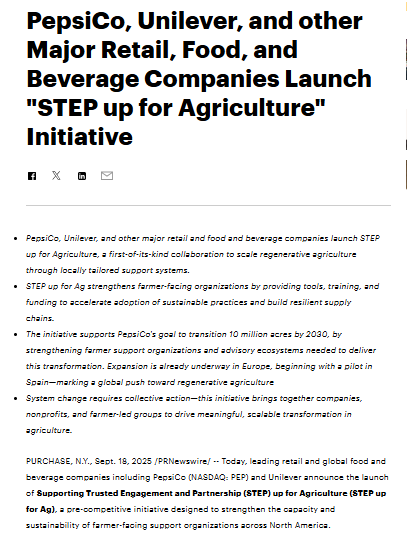
2. Walmart

3. Microsoft
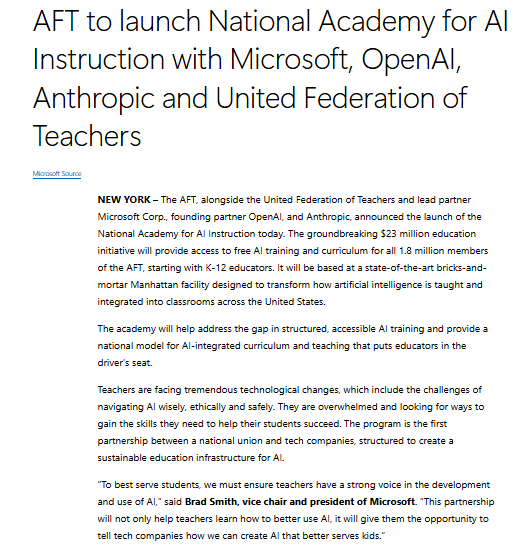
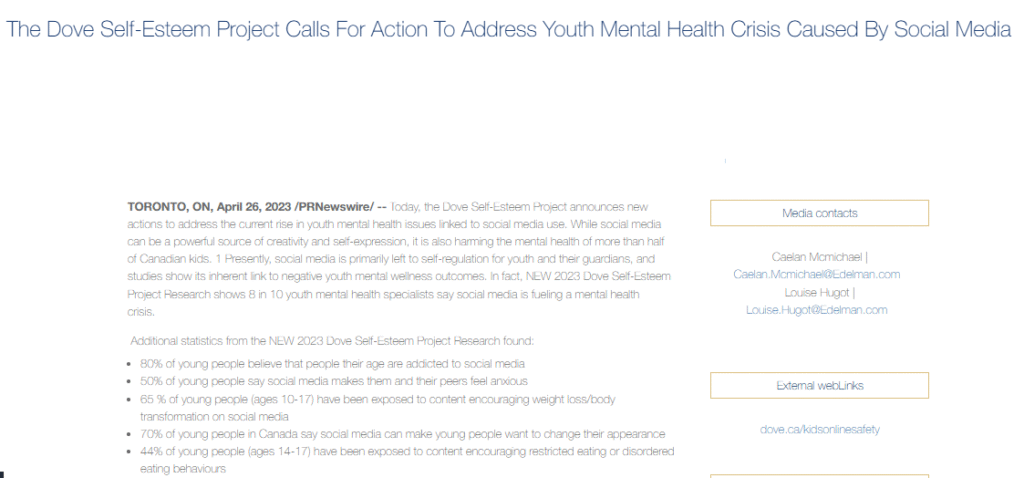
4. Dove
5. L’Oréal

6. KFC
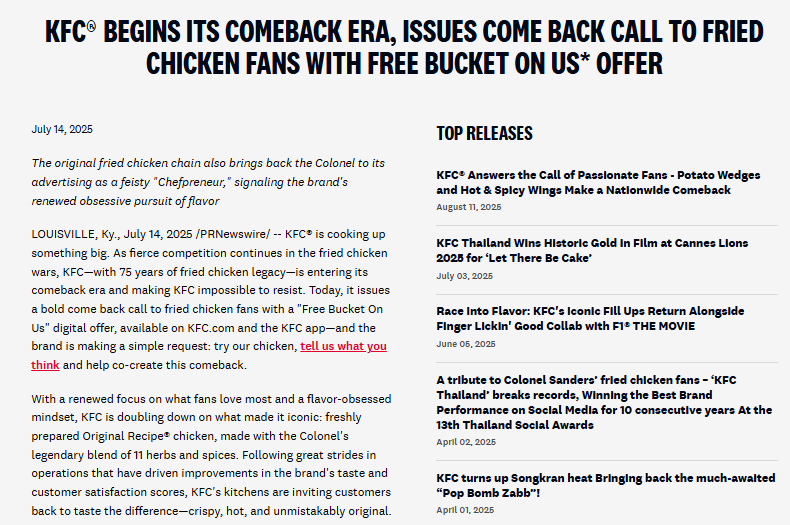
These campaign announcement examples reveal how effective communication transforms a press release from simple disclosure into a measurable influence driver. Reviewing these examples helps teams identify which tone, structure, and media strategy align with their campaign objectives. A well-executed campaign announcement establishes momentum, secures media credibility, and converts audience awareness into sustained engagement across digital and traditional platforms.
Which Tools Help in Writing and Sharing a Campaign Announcement Press Release?
Tools that help in writing and sharing a campaign announcement press release include platforms that optimize distribution strategy, maximize brand visibility, and align news delivery with modern SEO standards. Each tool serves a specific strategic function, from accelerating content publishing to amplifying signal strength across search and media ecosystems. Selecting the right platform depends on distribution scale, editorial control, and the target audience of the campaign announcement.
5 tools that help in writing and sharing a campaign announcement press release are reviewed below.
1. Signal Genesys: Signal Genesys operates as a performance-driven press release distribution platform (SEO publisher network, signal amplification system, media distribution hub) that integrates SEO visibility with authoritative publishing. Signal Genesys prioritizes digital signal generation that strengthens brand credibility across search engines and AI models. The white label capabilities allow agencies and marketers to maintain full brand control while leveraging optimized syndication across news portals like AP News, and Yahoo. The multimedia integration supports video, imagery, and podcast embedding, which strengthens audience engagement and retention.
The inclusion of real-time analytics provides direct visibility into pickup rates and keyword performance. The AI-driven structure accelerates release preparation, while its flexible distribution model supports scalable communication without long-term contracts or hidden costs. Signal Genesys positions campaign announcements as authoritative digital assets that sustain ranking value and brand consistency across channels.
2. PRNEWS.IO: PRNEWS.IO structures its services around a fixed-price model that delivers transparency and consistency in distribution spending. The platform connects brands and agencies to over 100,000 media outlets across 80 countries and offers multilingual coverage for international campaign announcements. The marketplace interface provides complete editorial control and allows users to select publication outlets based on region, domain authority, or niche relevance. The permanent backlink system creates lasting SEO value and improves website ranking through sustained authority signals.
The PRNEWS.IO publication turnaround time averages one to three days, which accelerates media exposure and supports time-sensitive campaign launches. The SEO-driven structure aligns releases with entity-based optimization standards and improves visibility in generative search experiences. PRNEWS.IO transforms campaign communication into a predictable and measurable marketing asset that drives exposure without dependence on traditional wire models.
3. eReleases: eReleases combines human editorial oversight with access to the PR Newswire network, and offers small and mid-sized organizations credibility and cost efficiency. The service includes professional editing, journalist outreach, and targeted industry distribution, which increases visibility among relevant media contacts. Each release undergoes manual review to align with journalistic formatting and SEO clarity to ensure that announcements maintain professional and technical precision.
Integration with PR Newswire enhances distribution reliability while maintaining flexibility for smaller budgets. eReleases provides transparent tiered pricing with options that include WireWatch analytics, industry segmentation, and SEO enhancements. The direct-to-journalist delivery builds authentic engagement that supports organic coverage in niche or national publications. eReleases functions as an accessible gateway to premium media networks, which equips campaign announcements with editorial polish and guaranteed distribution.
4. Business Wire: Business Wire specializes in global press release dissemination with a strong focus on investor relations, brand disclosures, and high-stakes corporate communication. The platform distributes content across 90,000 media outlets in 160 countries, including major financial portals and newsrooms such as Bloomberg, Reuters, and Nasdaq. The editorial review process enhances compliance and ensures accurate formatting for regulated sectors.
The integration of multimedia assets, regional targeting, and performance dashboards supports enterprise-grade visibility and transparency. The service offers real-time engagement tracking that quantifies exposure, audience behavior, and syndication reach. The compliance-ready structure aligns with corporate governance standards, making it suitable for publicly traded entities or high-visibility campaigns. Business Wire converts campaign announcements into market-credible news content that strengthens corporate reputation and meets investor communication standards.
5. PR Newswire: PR Newswire functions as one of the largest global wire services, distributing press releases to over 440,000 media endpoints across 170 countries. The PR Newswire network includes journalists, digital publishers, and news syndication partners that maintain long-standing trust in corporate and political communication. Each submission undergoes editorial validation that corrects formatting, validates links, and ensures SEO alignment before publication.
PR Newswire supports AI-generated post-distribution insights through SocialBoost, which increases exposure on digital platforms. The service integrates with Cision analytics, allowing teams to track audience engagement and pickup quality across multiple regions. PR Newswire remains the industry standard for institutions that prioritize media trust, brand authority, and comprehensive reach in global campaign announcements.
These press release distribution tools provide structured, data-driven methods for amplifying campaign announcements and enhancing their visibility across digital and traditional media ecosystems. Each platform aligns communication strategy with measurable SEO impact, real-time analytics, and editorial precision. Selecting the right tool depends on audience geography, content scale, and the intended signal value of the campaign narrative.
How Can the Impact of a Campaign Announcement Press Release Be Measured?
The impact of a campaign announcement press release can be measured through precise data analysis, media intelligence, and performance benchmarking (KPI tracking, conversion analysis, visibility comparison). A successful evaluation framework captures measurable outcomes across coverage, visibility, engagement, sentiment, and alignment with campaign objectives. The goal is to determine how effectively the release influenced awareness, visibility, and public perception. A data-driven approach transforms the press release from a communication output into a verifiable source of business intelligence.
Media coverage defines the first layer of measurable impact. Tracking the number of publications that featured the release, the reputation of those outlets, and the accuracy of message reproduction establishes reach and editorial influence. High-value coverage in recognized industry platforms holds greater significance than broader but low-quality exposure. Quantitative metrics such as impressions and reach indicate visibility, while qualitative indicators such as story framing and journalist sentiment reveal contextual authority.
Audience behavior provides the second dimension of measurement. Referral traffic data indicates how effectively readers transitioned from media outlets to owned digital properties. Unique visitor spikes, increased page duration, and higher interaction depth signal audience engagement with campaign content. A successful release attracts visitors who explore campaign pages, download resources, or interact with conversion points.
Social media and brand sentiment offer direct insight into audience response. Tracking likes, shares, and comments on platform-specific posts determines amplification strength and public resonance. Positive engagement, verified through sentiment analysis, reflects message alignment with audience expectations. Monitoring brand mentions across digital channels provides an overview of conversation frequency and tone. Increased share of voice relative to competitors demonstrates enhanced authority within the campaign domain.
Outcome-based metrics complete the performance assessment. Click-through rates, conversion percentages, and lead generation data reveal how effectively the release moved audiences toward measurable actions. ROI analysis compares the tangible value derived from publicity, traffic, and conversions against the total investment in content creation and distribution. Benchmarking these metrics against previous campaigns exposes performance progression and strategic gaps.